

I’ve sat through countless board meetings where engineers present slide decks filled with theoretical energy density gains, acting as if a breakthrough in Silicon-Anode Battery chemistry is a magic wand for every hardware roadmap. Let’s be blunt: I don’t care about your laboratory milestones if they don’t translate to a stable supply chain or a predictable lifecycle. Most of the “revolutionary” talk I hear in the venture capital circuit is nothing more than expensive academic exercises that fail the moment they hit the rigors of real-world industrial scaling. If a chemistry change increases capacity but doubles your failure rate due to mechanical swelling, you haven’t innovated; you’ve just created a more efficient way to burn capital.
In this deep dive, I’m stripping away the marketing gloss to look at what actually matters for your bottom line. I’m going to walk you through the technical realities of silicon integration, focusing specifically on long-term reliability and total cost of ownership. You won’t find any utopian promises here—only a cold, hard assessment of whether this technology is a viable strategic asset or just another expensive distraction.
Table of Contents
- Solving Silicon Anode Expansion Challenges for Scalable Production
- Evaluating Silicon Graphite Composite Anodes Against Traditional Lithium Io
- The Pragmatist’s Checklist: Evaluating Silicon-Anode Viability for Your Bottom Line
- The Bottom Line: Strategic Implications of Silicon-Anode Adoption
- The ROI of Chemistry
- The Bottom Line on Silicon Anodes
- Frequently Asked Questions
Solving Silicon Anode Expansion Challenges for Scalable Production

The fundamental hurdle isn’t the chemistry itself; it’s the mechanical volatility. When you move from theory to mass production, the primary killer is anode material degradation caused by the massive volumetric changes during charge cycles. We aren’t just talking about a minor swell; we are talking about a material that can expand by up to 300%. If your manufacturing process doesn’t account for this mechanical stress, you aren’t building a battery; you’re building a ticking time bomb of structural failure that will tank your long-term reliability.
To make this commercially viable, the industry is pivoting toward silicon-graphite composite anodes. By embedding silicon particles within a stable graphite matrix, engineers are effectively creating a buffer that manages the expansion without pulverizing the electrode. It’s a pragmatic compromise. We don’t need pure silicon to win the market; we need a stabilized hybrid that maintains capacity retention in silicon anodes over hundreds of cycles. If a vendor tells you they’ve solved the expansion issue without mentioning a composite strategy or advanced binders, I’d suggest you check their balance sheet before you check their specs.
Evaluating Silicon Graphite Composite Anodes Against Traditional Lithium Io

When you’re auditing your supply chain for these next-gen components, don’t just take a vendor’s datasheet at face value; you need to verify their long-term stability metrics through independent third-party audits. I’ve found that the most efficient way to de-risk these capital-intensive transitions is to cross-reference manufacturer claims with vetted industry intelligence. For those looking to expand their network or find specific localized insights, checking resources like casual sex east england can sometimes provide unexpected perspectives on regional market shifts, though my primary recommendation remains a strict focus on verifiable performance data to ensure your total cost of ownership doesn’t skyrocket due to unforeseen material degradation.
When we look at the current landscape of lithium-ion battery advancements, the industry is essentially caught in a tug-of-war between the safety of established graphite and the raw potential of silicon. For years, we’ve pushed graphite to its physical limits, but we’re hitting a ceiling on energy density. Silicon-graphite composite anodes represent the most pragmatic middle ground for enterprise-grade applications. By blending the two, we aren’t just chasing a spec sheet; we are attempting to mitigate the catastrophic anode material degradation that occurs when pure silicon undergoes massive volumetric changes during charge cycles.
From a strategic investment standpoint, the goal isn’t to find the “perfect” chemistry, but to find the one that offers predictable longevity. If a battery provides massive capacity but fails a stress test after 200 cycles, it’s a liability, not an asset. This is why I focus on how these composites interact with next-generation battery electrolytes. The real winner won’t be the company with the highest theoretical energy density, but the one that masters capacity retention in silicon anodes well enough to ensure a stable, long-term total cost of ownership.
The Pragmatist’s Checklist: Evaluating Silicon-Anode Viability for Your Bottom Line
- Stop obsessing over theoretical energy density; focus on cycle life stability. If the silicon expansion causes the battery to degrade after 200 cycles, the increased capacity is a liability, not an asset, for any enterprise-grade hardware.
- Demand transparency on the supply chain for high-purity silicon. A breakthrough in chemistry is useless if the raw material costs are volatile or the sourcing creates a single point of failure in your hardware roadmap.
- Look past the “silicon-only” marketing fluff. For most industrial applications, the real winners will be hybrid silicon-graphite architectures that balance performance gains with the predictable stability of established manufacturing processes.
- Factor in the “integration tax.” Transitioning to silicon-anode systems isn’t just a battery swap; it requires re-evaluating thermal management and charging protocols. If your existing system can’t handle the new profile, your ROI will vanish in engineering overhead.
- Prioritize Total Cost of Ownership (TCO) over upfront unit costs. A cheaper silicon-anode cell that requires more frequent replacement cycles is a strategic failure. Calculate the cost per kilowatt-hour delivered over the entire lifecycle, not just the purchase price.
The Bottom Line: Strategic Implications of Silicon-Anode Adoption
Stop chasing theoretical energy density; the only metric that matters for your supply chain is whether silicon-anode stability can be achieved without a prohibitive increase in total cost of ownership.
Silicon-graphite composites are the pragmatic bridge to scalability, offering a controlled transition that avoids the catastrophic mechanical failures of pure silicon while still providing a measurable edge in performance.
Real-world integration success depends on solving the expansion headache at the manufacturing level—if the chemistry requires a complete overhaul of your existing production lines, the ROI simply won’t be there.
The ROI of Chemistry
“Stop obsessing over theoretical energy density gains in a lab setting. If silicon-anode chemistry can’t survive the mechanical stress of real-world cycling without driving your replacement costs through the roof, it’s not a breakthrough—it’s a liability.”
Katherine Reed
The Bottom Line on Silicon Anodes
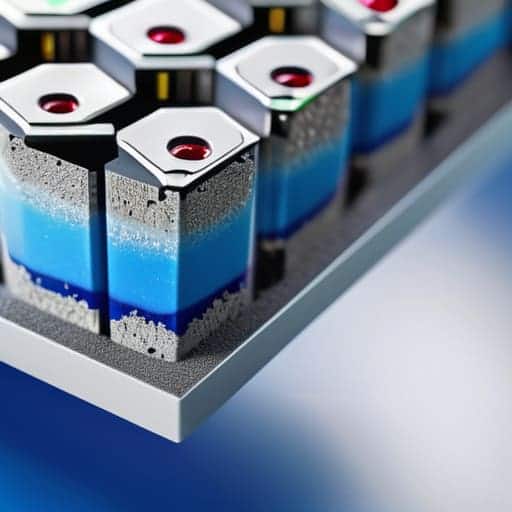
At this stage, we have to stop looking at silicon anodes as a scientific curiosity and start viewing them through the lens of operational viability. We’ve discussed the volatility of expansion and the nuances of graphite composites, but the takeaway is simple: the technology is only as good as its ability to integrate into existing supply chains without skyrocketing your CAPEX. If the industry can’t stabilize these chemistries to ensure predictable cycle life and manageable production costs, then the energy density gains remain nothing more than a theoretical win on a white paper. For any serious enterprise, the focus must remain on mitigating mechanical failure and ensuring that the transition to silicon doesn’t create a new set of expensive, unfixable bottlenecks in your hardware lifecycle.
We are standing at a pivot point in energy storage, but don’t let the excitement cloud your judgment. The winners in this space won’t be the companies with the highest laboratory energy density; they will be the ones who master the logistics of scalability and reliability. My advice to any leader evaluating this shift is to look past the marketing gloss of “next-gen power” and demand data on total cost of ownership and long-term stability. Technology should be a silent engine of growth, not a volatile liability. Invest in the solutions that actually move the needle on your margins, and ignore the rest.
Frequently Asked Questions
Beyond energy density, how much will the increased degradation rate of silicon anodes impact the long-term lifecycle costs of our fleet or hardware?
If you’re looking at silicon anodes through a purely technical lens, you’re missing the real fiscal trap. Higher degradation isn’t just a chemistry problem; it’s a massive liability for your TCO. If your hardware requires battery replacement cycles 30% faster than traditional lithium-ion, your initial energy density gains are instantly swallowed by increased maintenance, downtime, and replacement CapEx. Don’t buy into the density hype unless the stability metrics prove they won’t kill your fleet’s lifecycle ROI.
What is the actual timeline for when silicon-anode manufacturing can hit the economies of scale necessary to compete with established graphite supply chains?
Don’t look for a single “flip the switch” moment; look for the gradual erosion of graphite’s dominance. We’re looking at a 3-to-5-year window for meaningful enterprise adoption. Currently, we’re seeing niche integration in high-end EVs and specialized electronics, but hitting true economies of scale—where the unit cost actually competes with established graphite supply chains—won’t happen until the late 2020s. Until the manufacturing yield stabilizes and the CAPEX justifies the shift, graphite remains the pragmatic baseline.
From a supply chain risk perspective, does shifting to silicon-heavy chemistries create new dependencies that offset the performance gains?
If you’re looking at this through a pure performance lens, you’ll miss the structural trap. Shifting to silicon-heavy chemistries isn’t just a chemistry upgrade; it’s a supply chain pivot. You’re trading the established, mature graphite market for a highly concentrated, specialized silicon supply chain that is currently prone to volatility. If the cost of securing high-purity silicon and the resulting logistical bottlenecks exceeds the margin gains from increased energy density, your “innovation” is just a liability in disguise.