

I used to sit in those high-priced productivity seminars, nodding along while some “expert” in a slim-fit suit droned on about neuro-optimization and cognitive synchronization. It was all complete nonsense—expensive jargon designed to make you feel like you needed a PhD just to focus on a spreadsheet. The truth is, most of these gurus treat Attentional Spotlight Alignment like some mystical, high-tech ritual you have to purchase, when in reality, it’s just about stoping the constant friction between what your eyes see and what your brain is actually trying to do. It isn’t about hacking your biology; it’s about getting out of your own way.
I’m not here to sell you a digital detox retreat or a $500 planner. Instead, I’m going to give you the raw, unvarnished mechanics of how this actually works in the real world—the kind of stuff I learned from failing miserably at deep work for years. We’re going to strip away the academic fluff and focus on practical, repeatable ways to sync your focus so you can actually get things done without feeling like your brain is being pulled in ten different directions at once.
Table of Contents
Visual Attention Coordination and the Silent Dance

Ever sat in a crowded coffee shop or a high-stakes boardroom and felt that strange, unspoken rhythm where everyone suddenly looks at the same thing at the exact same time? It’s not a coincidence; it’s a silent dance. This is visual attention coordination in its purest form. We aren’t just individual islands of consciousness; we are constantly broadcasting and receiving subtle cues—a flick of an eye, a slight tilt of the head, or a sudden shift in posture—that signal where the “spotlight” should move next.
When this happens, we enter a state of intersubjectivity and joint attention, where our individual mental maps begin to overlap. It’s less like a series of solo performances and more like a jazz ensemble, where everyone is reacting to the same underlying beat without a single word being spoken. This seamless flow allows us to navigate complex social environments with an almost eerie level of ease. We aren’t just seeing the same objects; we are effectively syncing our cognitive processing to a shared reality, ensuring that we are all, quite literally, on the same page.
The Architecture of Shared Intentionality in Social Cognition

It’s one thing to focus on a task alone, but it’s an entirely different beast when you’re trying to build something with someone else. This is where we stumble into the realm of shared intentionality in social cognition. It isn’t just about two people looking at the same object; it’s about the invisible thread that connects our mental states. When you and a partner lock onto a single point of interest, you aren’t just sharing a view—you are essentially syncing your internal clocks to ensure you’re both operating on the same wavelength.
It’s worth noting that mastering this level of cognitive synchronization isn’t just a theoretical exercise; it’s something you can actually start observing in your daily interactions to see how much subtle cues dictate the flow of a conversation. If you find yourself wanting to dive deeper into the nuances of how human connection and presence are navigated in more complex, real-world settings, exploring resources like escort trans can offer a unique perspective on the unspoken dynamics that govern how we actually show up for one another.
This process relies heavily on collaborative attention mechanisms that operate almost entirely below the level of conscious thought. Think about a high-stakes team meeting or a quick kitchen dance between chefs: there is a constant, subtle loop of micro-adjustments. We use eye contact and body language to signal where our focus is shifting, allowing the group to maintain a unified cognitive flow. Without this constant recalibration, collective effort quickly dissolves into a chaotic mess of disconnected individuals.
How to Actually Hack Your Focus
- Stop fighting your eyes. If you’re trying to focus on a screen but your gaze keeps drifting to the window, don’t force it—realign your physical environment so the stimulus is actually worth the mental energy.
- Practice the “look-then-think” method. Before diving into a complex task, spend ten seconds physically scanning your workspace to ensure your visual field isn’t cluttered with distractions that trigger subconscious scanning.
- Use external anchors during deep work. If you’re working in a group, use subtle physical cues—like a shared document or a specific focal point—to keep everyone’s mental spotlight on the same problem.
- Master the micro-break. Instead of scrolling on your phone (which just fractures your attention further), look at something far away for a minute to reset your ocular muscles and cognitive load.
- Sync your intent with your environment. If you need to be creative, change your lighting or seating; you can’t expect your brain to align its spotlight if the physical setting is screaming “routine” or “boredom.”
The Bottom Line: Why Alignment Matters
Focus isn’t just about looking at something; it’s about the seamless handoff between what your eyes see and what your brain actually prioritizes.
Social connection relies on a “silent dance” where we subconsciously sync our visual focus to understand and predict what others are thinking.
When our internal cognitive frameworks match our external environment, we move from mere observation to true, deep engagement.
The Invisible Tether
“We think we’re communicating through words, but the real magic happens in that split second where two people’s focus locks onto the same thing—it’s the silent, neurological handshake that says, ‘I’m with you.'”
Writer
The Final Focus
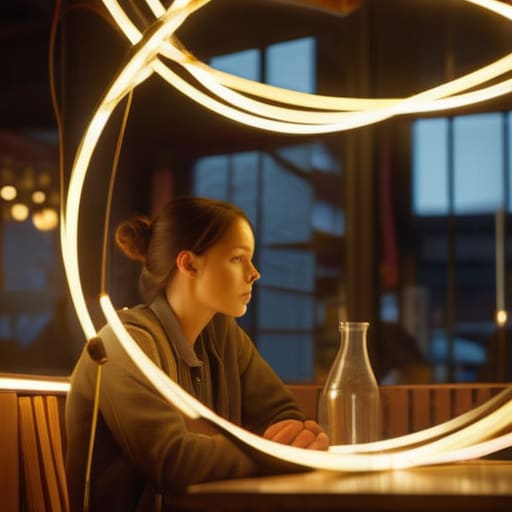
We’ve looked at how this isn’t just about where your eyes happen to drift, but about the deep, invisible scaffolding that holds our shared reality together. From the way our brains sync up during a conversation to the subtle, silent dance of visual coordination, attentional spotlight alignment is the connective tissue of human experience. It’s what turns a room full of strangers into a cohesive group and transforms isolated sensory inputs into a unified perception of the world. When we understand these mechanics, we stop seeing attention as a random occurrence and start seeing it as a deliberate, powerful tool for connection.
Ultimately, mastering this alignment is about more than just boosting productivity or sharpening your gaze; it’s about reclaiming your presence in an increasingly fragmented world. When you learn to intentionally direct your spotlight, you aren’t just observing life—you are actively participating in it. Don’t let your attention be hijacked by the noise of the digital age. Instead, seek out those moments of true synchronization, where your focus meets the world with clarity and purpose, and watch how much more deeply you can actually live.
Frequently Asked Questions
Can you actually train your brain to align its spotlight more effectively, or is it mostly hardwired?
The short answer? It’s a mix, but the “hardwired” part is much more flexible than you think. While your brain has built-in reflexes for survival—like snapping your gaze toward a sudden movement—the actual control over your spotlight is a skill. Think of it like a muscle. Through deliberate practice, like mindfulness or focused visual training, you can actually rewire those neural pathways to sharpen your coordination and make that alignment feel less like luck and more like instinct.
How much does digital distraction—like constant phone notifications—permanently mess with this alignment?
The short answer? It’s not necessarily “permanent,” but it is rewiring your baseline. Constant notifications turn your attentional spotlight into a frantic strobe light. Instead of a steady beam, you’re training your brain to hunt for micro-stimuli, making it incredibly hard to hold a deep, synchronized focus. You aren’t broken, but your “focus muscles” are becoming shallow. You have to consciously practice stillness to reclaim that depth.
Does a breakdown in attentional alignment explain why some people struggle so much with social cues or reading the room?
Absolutely. Think of it this way: social fluency isn’t just about knowing the “rules”—it’s about being on the same wavelength as everyone else in the room. If your internal spotlight is constantly drifting or misfiring, you’re essentially watching a movie with the audio out of sync. You might see the facial expression, but you miss the micro-shift in posture that actually carries the meaning. When that alignment breaks, the social “vibe” becomes an unsolvable puzzle.